Pakistan's Overseas Workers Sent $4.25 Billion Home in a Single Month — Here's How to Join Them
Pakistan broke its all-time remittance record in May 2026 — $4.25 billion sent home in a single month. Here's what drove the number, which countries sent the most, and how to safely get an overseas job and become part of the next wave.

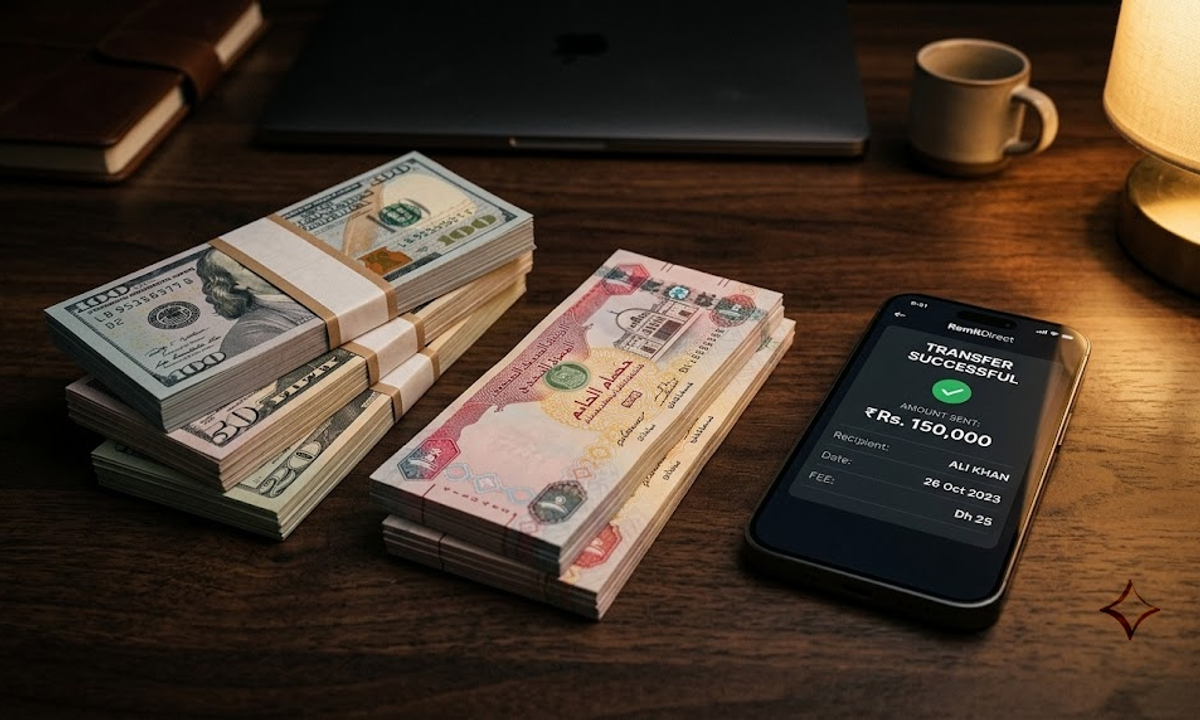
My uncle left for Saudi Arabia in 1987 with a single suitcase and about three thousand rupees in his pocket.
He spent his first six months in Riyadh doing construction work in the heat that would stop most people cold. Sent money home every month without fail. That money paid for my father's college fees. Then my aunt's wedding. Then a small plot of land outside Faisalabad that the family still owns today.
He never thought of himself as doing anything significant. He was just working.
But here's what that story looks like in the data, multiplied across millions of families: in May 2026, overseas Pakistanis sent home $4.251 billion in a single month. One month. The highest figure ever recorded in Pakistan's history, according to the State Bank of Pakistan.
To put that in perspective, that's more than Pakistan earns from textile exports in an average month. More than most countries receive in an entire quarter. And it came not from corporations or government deals, but from individual people wiring money home from Riyadh, Dubai, London, and a hundred other cities.
This is what that record actually means. And more importantly, this is how you become part of it.
The Number That Made Headlines — And What It Really Means
$4.251 billion. One month. Pakistan.
The State Bank of Pakistan released the figure on June 10, 2026. Business Recorder, Express Tribune, Gulf News everyone ran it. And they were right to. This wasn't a marginal record. The previous monthly high was $4.05 billion, set in March 2025. May 2026 blew past it cleanly.
Month-on-month, remittances jumped 20.2%. Year-on-year, they rose 15.4%. Cumulative inflows for the first eleven months of FY2025-26 hit $38.1 billion — up 9.2% from $34.9 billion the year before. Analysts at Topline Securities now project full-year FY26 remittances will exceed $41 billion, the first time that mark has ever been crossed.
But here's the thing about that number that most coverage misses.
$4.25 billion didn't arrive in one wire transfer. It came in thousands of individual transactions, a driver in Dammam sending PKR 50,000 home for his daughter's school fees. An engineer in Abu Dhabi covering his parents' medical bills. A nurse in the UK is putting money aside for a plot of land. Each one is a small decision. Together, a record.
Waqas Ghani, Head of Research at JS Global, told Business Recorder that the monthly average has now risen to $3.5 billion in FY26 from $3.2 billion the prior year. He attributed this to three structural factors: higher emigration volumes, a sustained shift from hawala to formal banking channels, and relatively stable exchange rate conditions.
In other words, more people going abroad, sending money more efficiently, into a more stable system. That combination is what built the record.
Where the Money Is Coming From — Country by Country
The breakdown tells you exactly where Pakistan's overseas workforce is concentrated.
Saudi Arabia: $1.025 billion. The kingdom remained the single largest source. Up 12% year-on-year, up 22% from April. Saudi Arabia has been Pakistan's biggest remittance corridor for decades and shows no sign of changing that. Construction, healthcare, retail, and increasingly IT — Pakistani workers are spread across every sector there.
UAE: $1.007 billion. The UAE number is the one analysts are talking about. A 33% rise year-on-year. A 37% jump month-on-month. That kind of acceleration doesn't happen from seasonal factors alone. Dubai and Abu Dhabi are actively expanding — new infrastructure, new tech hubs, new healthcare facilities — and Pakistani workers are filling those roles fast.
UK: $645 million Up 15% from April. The UK corridor has grown steadily as more Pakistani professionals move into healthcare, finance, and tech roles there.
USA: $350 million, Up 10% from April. Smaller than the Gulf but growing, particularly from professionals in IT and medicine.
EU countries: $466 million Up 8% month-on-month. Australia was the surprise, with a 41.5% year-on-year surge. Italy, Spain, Ireland, and the Netherlands all posted strong gains.
The pattern is clear. Gulf countries — Saudi Arabia and UAE together — account for roughly half of everything Pakistan receives. If you are thinking about overseas work, that is where the volume is.
Who These 300,000 People Actually Are
Between January and May 2026, more than 300,000 Pakistanis secured jobs in Middle Eastern countries, according to the Bureau of Emigration and Overseas Employment.
Saudi Arabia took the largest share — 143,586 individuals in five months. The UAE received around 50,000. Qatar took 25,500. Bahrain 10,129.
These aren't all engineers and IT professionals. The majority are skilled and semi-skilled workers — electricians, plumbers, drivers, healthcare workers, retail staff, construction supervisors, hospitality workers. People with trade skills and a willingness to work in a different country.
What they have in common isn't a degree. It's documentation, a verified job offer, and the knowledge of how the system actually works.
That last part is where most people who want to go abroad get stuck.
Why This Record Is Different From Previous Ones
Pakistan has had good remittance months before. What makes May 2026 different is that analysts don't attribute it entirely to Eid seasonal transfers.
Yes, Eid-ul-Adha timing boosted the May figure. That's real and acknowledged. But Waqas Ghani at JS Global was specific — the underlying monthly average has been rising steadily throughout FY26, independent of festivals. The $3.5 billion monthly average this year versus $3.2 billion last year tells you something structural is happening, not just seasonal.
Three things are driving it.
First, more Pakistanis are going abroad. The government announced a target of 800,000 overseas placements in 2026, up from roughly 740,000 in 2025. The first five months are already tracking ahead of pace.
Second, people are using banks instead of hawala. This is significant. Informal transfer networks have been a major part of Pakistan's remittance landscape for years. The shift to formal channels means the same money that was always being sent is now showing up in official SBP figures. The record partly reflects better measurement, not just more money.
Third, the rupee has been relatively stable. When the exchange rate is volatile, overseas Pakistanis sometimes delay transfers or use informal channels to get better rates. Stability encourages formal transfers. The rupee held around Rs278 per dollar through May, which helped.
The Shift From Hawala to Banks — Why It Matters for You
If you are currently working abroad and sending money home through informal channels — or planning to — this section is specifically for you.
The hawala system has been used by overseas Pakistanis for generations. It's fast, it's cheap, and it reaches areas that banks don't. For a long time, it made sense.
But the calculus has shifted.
The State Bank of Pakistan's Roshan Digital Account now offers competitive exchange rates for overseas Pakistanis, along with the ability to invest in Pakistani government securities and real estate directly from abroad. The account is free to open, accessible online, and has no minimum balance requirement.
Beyond Roshan, banks like HBL, MCB, and UBL all have specific overseas Pakistani remittance packages with reduced transfer fees and real-time exchange rates. Western Union and Wise have also become significantly cheaper for Pakistan corridors over the past two years.
The practical benefit of formal channels beyond the rate:
Your transfer history builds a verifiable financial record. That matters when you eventually want a loan, a property registration, or a visa renewal that requires proof of income.
Hawala leaves no trail. Formal channels leave a record that works in your favour.
How to Actually Get an Overseas Job — Without an Agent Taking Half Your Future
This is the section most guides skip because it involves naming uncomfortable realities.
The overseas job market in Pakistan has a serious fraud problem. Unlicensed agents charge upfront fees ranging from PKR 200,000 to PKR 800,000 for jobs that either don't exist or pay a fraction of what was promised. The Bureau of Emigration and Overseas Employment receives thousands of complaints every year.
Here's how to protect yourself.
Verify the agent first. Every legitimate overseas recruitment agent in Pakistan must be registered with the Bureau of Emigration and Overseas Employment. Check their registration status at beoe.gov.pk before paying anything. If they're not listed — walk away.
Never pay before a verified offer letter. Legitimate employers do not charge candidates. If someone is asking for money before you have a signed, verifiable offer letter from a named company — that's a red flag. Check the company's existence independently. Look them up on the UAE's DED portal, Saudi Arabia's Ministry of Commerce, or Qatar's MOCI website.
Use government channels where possible. The Overseas Employment Corporation (OEC) at oec.gov.pk lists verified vacancies from registered employers. It's slower than private agents but significantly safer.
The platforms that actually work:
- Bayt.com — the largest Gulf job board, directly connects employers and candidates
- Naukrigulf.com — specifically built for South Asian applicants targeting Gulf work
- LinkedIn — essential for professional and technical roles
- OEC official portal — oec.gov.pk for government-verified listings
Apply directly wherever possible. Cut out the middleman.
The Documents You Need Before You Even Apply
This is where most people lose months. Getting documentation sorted after you receive an offer costs time you don't have.
Start these now, before you have a job offer:
1. HEC Attestation of your degree Required for almost all professional roles in Gulf countries. Takes 4-6 weeks minimum. Apply at hec.gov.pk.
2. MOFA Attestation After HEC attestation, your documents need Ministry of Foreign Affairs authentication. Another 2-3 weeks.
3. Police Clearance Certificate Obtainable from your local NADRA office. Required for all Gulf visas.
4. Medical Fitness Certificate must be from a Pakistan Embassy-recognised hospital. Gulf countries have specific approved hospitals — check the relevant country's embassy website for the list.
5. BEOE Registration Register with the Bureau of Emigration and Overseas Employment before departure. This protects your rights as an overseas worker and is required for official immigrants.
Getting these ready in advance means you can move quickly when an offer comes — and in the Gulf job market, the candidate who can move fast wins.
How to Send Money Home the Right Way
Once you're working abroad, the question becomes efficiency — keeping as much of your earnings intact as possible when sending home.
Roshan Digital Account Open one before you leave or immediately after arriving. Available through HBL, MCB, UBL, and several other banks. Offers competitive USD-PKR rates and the ability to invest in Pakistan Banao Certificates and Naya Pakistan Certificates while abroad. Details at sbp.org.pk/roshan.
Bank Transfers HBL Express, MCB Smart Remittance, and UBL Tezraftaar all offer preferential rates for overseas Pakistanis. Compare rates on the day of transfer — they change daily.
Wise (formerly TransferWise) Significantly cheaper than traditional bank wire transfers for UK and EU corridors. Useful if you're working in Europe. Not yet optimal for Gulf corridors where local options are usually better.
What to avoid Unlicensed exchange companies operating informally. They sometimes offer better rates but carry legal risk, particularly in countries that have tightened money transfer regulations.
The Risks Nobody Talks About
This record is real and the opportunity is real. But honesty requires saying this clearly.
The Gulf is not without risk for overseas workers. The Pakistan Institute of Development Economics published a paper earlier this year noting that around half a million Pakistanis may not go abroad in 2026 due to regional tensions from the US-Iran conflict that began in late February. Hundreds were reported queuing outside the Dubai consulate in Karachi during the height of the crisis in March, uncertain whether their visas would be processed.
Gulf employment depends on geopolitical stability that Pakistan cannot control. The 54% of Pakistan's total remittances that originate from the Middle East represent a significant concentration risk. A serious regional disruption — extended conflict, economic contraction in Gulf states, changes in Saudisation or Emiratisation policies — would hit Pakistani families hard.
This isn't a reason not to go. Millions of Pakistanis have built genuinely better lives through Gulf employment. But it's a reason to go with open eyes — to save aggressively, to build skills that transfer, and to not treat overseas income as permanent.
The workers who benefit most from Gulf employment are the ones who use it as a launchpad, not a destination.
Final Thoughts
My uncle came back from Saudi Arabia in 2003. He'd been there sixteen years. He came back with enough saved to buy a house outright and put three of his children through university.
He also came back with a bad knee from years of construction work and a hearing issue from factory noise that nobody warned him about.
Both things are true. The opportunity is real. The difficulty is real. The record remittance figure is real — $4.25 billion in a single month, from millions of people like him making the same quiet decision every month.
If you are thinking about overseas work, the data says the market is there. Saudi Arabia and the UAE together received over 190,000 Pakistani workers in the first five months of this year alone. The jobs exist. The pathways exist.
Do the documentation early. Verify every agent. Use formal transfer channels. Go in knowing the risks and the rewards both clearly.
The record was built one transfer at a time. Most of those transfers came from people who simply decided to go.
Key Takeaways
- Pakistan received $4.251 billion in remittances in May 2026 — the highest monthly figure in the country's history, per State Bank of Pakistan data
- Saudi Arabia contributed $1.025 billion, UAE $1.007 billion — together accounting for nearly half the total
- 300,000+ Pakistanis secured Gulf jobs between January and May 2026
- Full-year FY26 remittances projected to exceed $41 billion for the first time ever
- The record reflects structural factors — more emigration, shift from hawala to banks, stable exchange rate — not just Eid seasonality
- Roshan Digital Account offers competitive rates and investment options for overseas Pakistanis
- Always verify recruitment agents at beoe.gov.pk before paying anything
- Start HEC attestation and documentation before receiving a job offer — it takes months
Frequently asked questions
Is $4.25 billion really Pakistan's highest-ever monthly remittance?+
Yes. The State Bank of Pakistan confirmed on June 10, 2026 that May 2026's inflow of $4.251 billion surpassed all previous monthly records. The previous high was $4.05 billion in March 2025.
Which country sends the most remittances to Pakistan?+
Saudi Arabia, with $1.025 billion in May 2026 alone. The UAE was second at $1.007 billion. Together they account for nearly half of Pakistan's monthly remittance total.
How can I verify an overseas recruitment agent is legitimate?+
Check their registration at beoe.gov.pk — the Bureau of Emigration and Overseas Employment's official portal. Unregistered agents are illegal. Never pay upfront fees before a verified offer letter.
What is the Roshan Digital Account?+
A special bank account for overseas Pakistanis, offered through HBL, MCB, UBL and others. It provides competitive USD-PKR exchange rates and allows investment in Pakistani government securities from abroad. Details at sbp.org.pk/roshan.
How long does document attestation take for Gulf jobs?+
HEC attestation typically takes 4-6 weeks. MOFA attestation adds another 2-3 weeks. Police clearance is faster — usually 1-2 weeks from NADRA. Start the process before you have an offer, not after.
Written by
Umer Khan
Writer/Founder
Umer Khan is the founder and editor of CareerPulse — covering tech careers, remote jobs, scholarships, and personal finance for readers across Pakistan and beyond.
Newsletter
Get smarter about careers every Sunday.
One email, free, unsubscribe anytime. Jobs, scholarships, finance and tech for ambitious readers.